How to Field Strip a Glock 19 (Disassembly & Reassembly Guide)
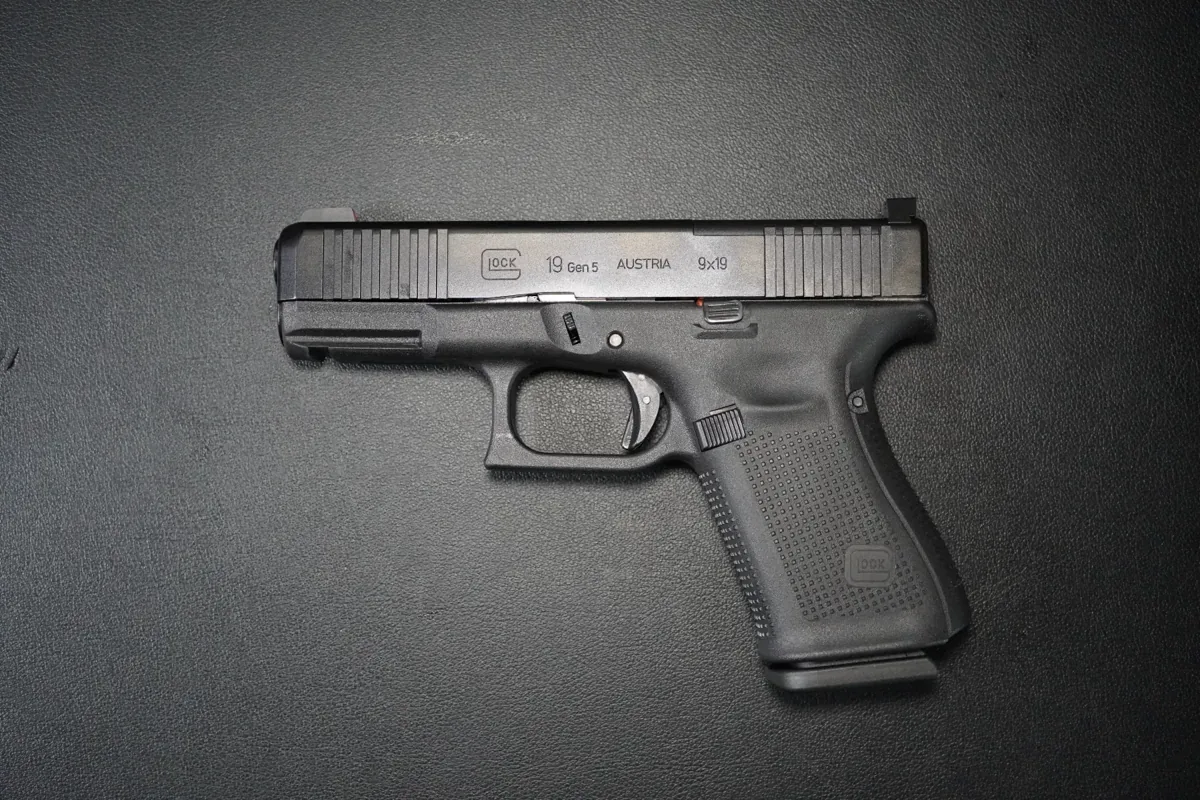
This guide is written in response to how frustrating it can be for a new gun owner to disassemble a Glock (17, 19, 26, 45, you name it). I certainly struggled with it myself; my first gun was a Glock 19. My wife and several friends who got into firearms and started with a Glock struggled with it too.
I think this format of GIF-like videos works better than a YouTube video because you do not need to rewind back and forth to see the exact manipulations over and over. You also get text instructions, if that is your thing.
Make sure to download and read the official Glock manual too: downloadable materials page.
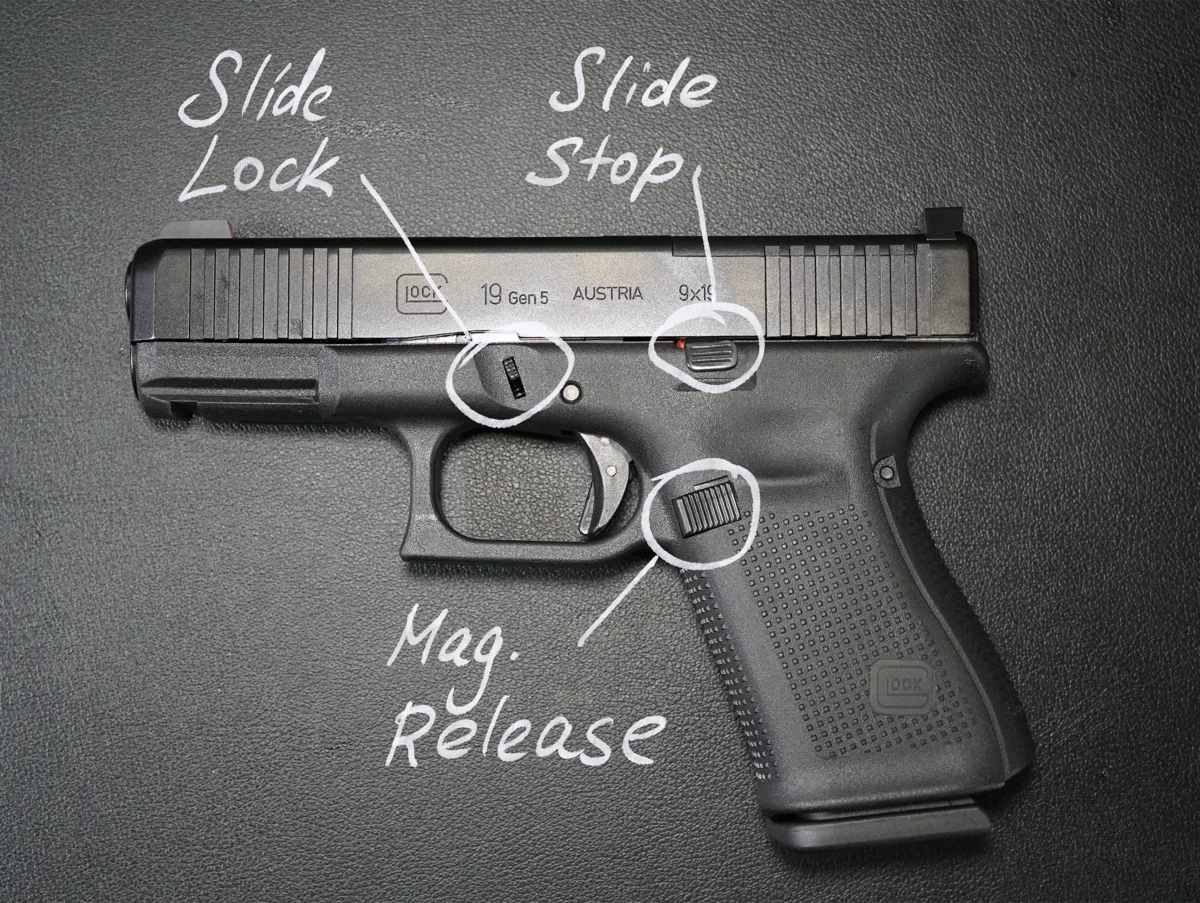
The 3 Controls You Need to Know
- Magazine release: the button you press to remove the magazine.
- Slide stop: the thin lever used to lock the slide open.
- Slide lock: the two small takedown tabs above the trigger area. You pull these straight down to remove the slide.
Part 1: Confirm It's Unloaded
Step 1. Remove the magazine by pressing the magazine catch.
This only removes the magazine. It does not automatically empty the chamber.
Step 2. Lock the slide back. With your finger off the trigger and outside the trigger guard:
- Push up on the slide stop lever
- Grasp the rear serrations
- Pull the slide fully to the rear to eject anything that may be in the chamber and lock the slide.
The rear serrations are the ridged grooves at the back of the slide.
New Gun Owner Tip: Lots of people have trouble racking a Glock slide. The recoil spring has a lot of tension, and without practice it can be challenging to pull the slide back while holding the slide stop up with your thumb. One trick I found helpful is to insert the empty magazine again and rack the slide with it in place. The empty magazine will engage the slide stop for you. Make sure the magazine is empty.
Step 3. If you used the empty magazine to lock the slide, drop it back out the same way you did in Step 1 before continuing. Then visually and physically inspect both the chamber and the magazine well. Look into the chamber, then feel into it with a finger or a chamber flag.
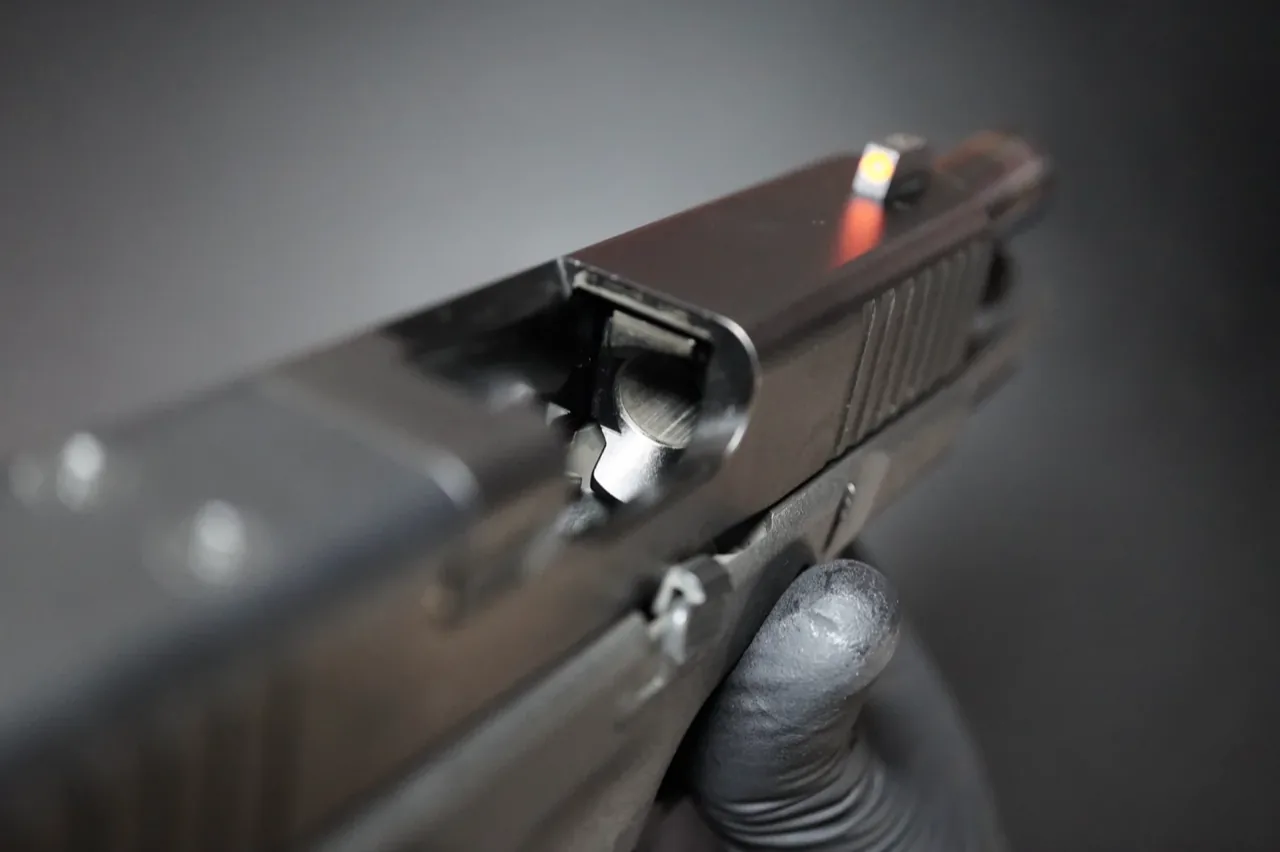
Step 4. Release the slide and let it return to the forward position.
Step 5. Point the pistol in a safe direction and pull the trigger.
If Step 5 makes you uneasy, that's normal. For a Glock, that is exactly why Step 3 matters so much. Do not rush it, and do not skip it.
Part 2: Disassembly (Field Strip)
Step 6. Locate the slide lock: the ambidextrous tabs right above the trigger guard. You will pull both of them down simultaneously to unlock the slide in Step 8. Note: if you try to pull them down now, they will stay in place.
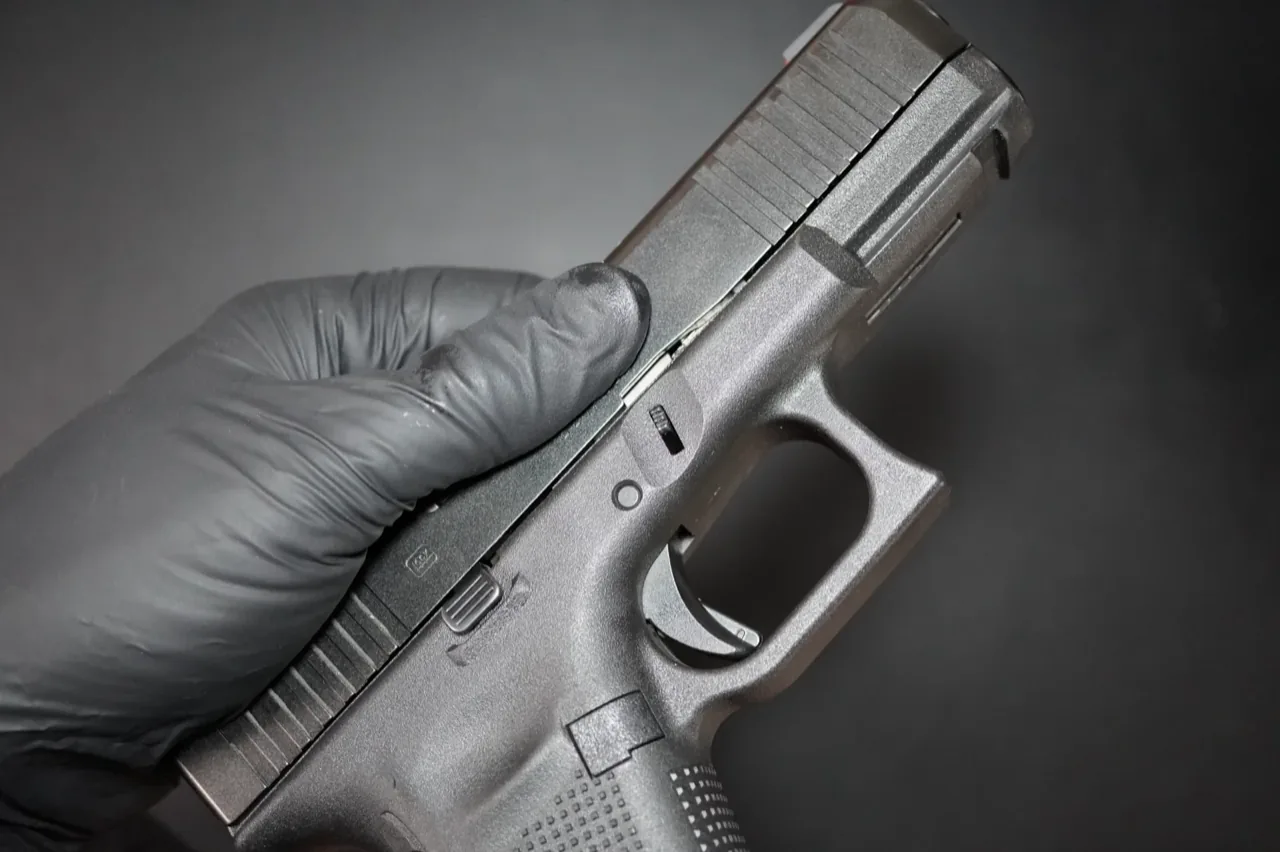
Step 7. Hold the pistol in your firing hand with your fingers across the top rear of the slide. Retract the slide only about 1/8 inch, or roughly 3 mm, and hold it there. With your fingers over the top of the slide and your thumb underneath, it should feel more like making a fist than pulling.
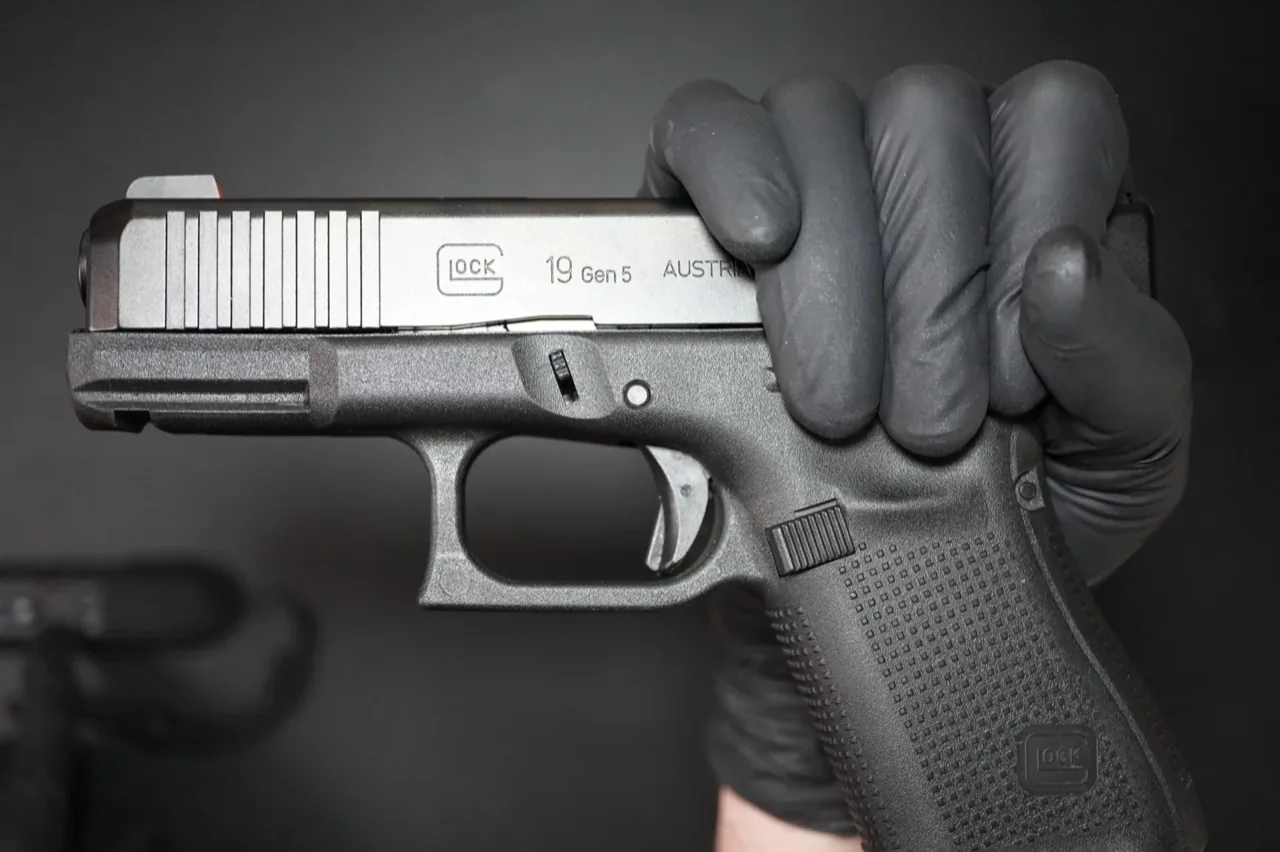
This is the part most beginners overdo. You are not racking the slide again. You just want a tiny rearward movement, barely enough to feel it move. If you pull too far back, the trigger resets to the forward position. If that happens, point the pistol in a safe direction and pull the trigger again before continuing.
Step 8. While holding the slide in that slightly rearward position, use your support-hand thumb and index finger to pull the slide lock straight down evenly on both sides. These are the two small takedown tabs above the trigger guard.
Step 9. Keep the slide lock pulled down and guide the slide forward off the frame.
The slide comes straight forward off the front of the frame. If it does not move, the usual reason is that the slide was pulled too far back in Step 7 and the trigger reset.
If the slide does not come off
- Make sure the trigger was pressed in Step 5.
- Make sure you moved the slide only a tiny amount in Step 7.
- Make sure both sides of the slide lock are being pulled straight down together.
If your slide lock tabs feel stiff or your hands are tired, a small Glock disassembly tool can help. Slip it over the tabs and pull down evenly. Judging by quite a few Reddit posts, this tool has probably saved a lot of broken fingernails.
Step 10. Press the recoil spring assembly slightly toward the muzzle, then lift it out of the slide.
Lift it out slowly and keep control of it. It is under spring tension.
Step 11. Lift the barrel by the locking cams, move it slightly toward the front of the slide, then lift it up and out toward the rear.
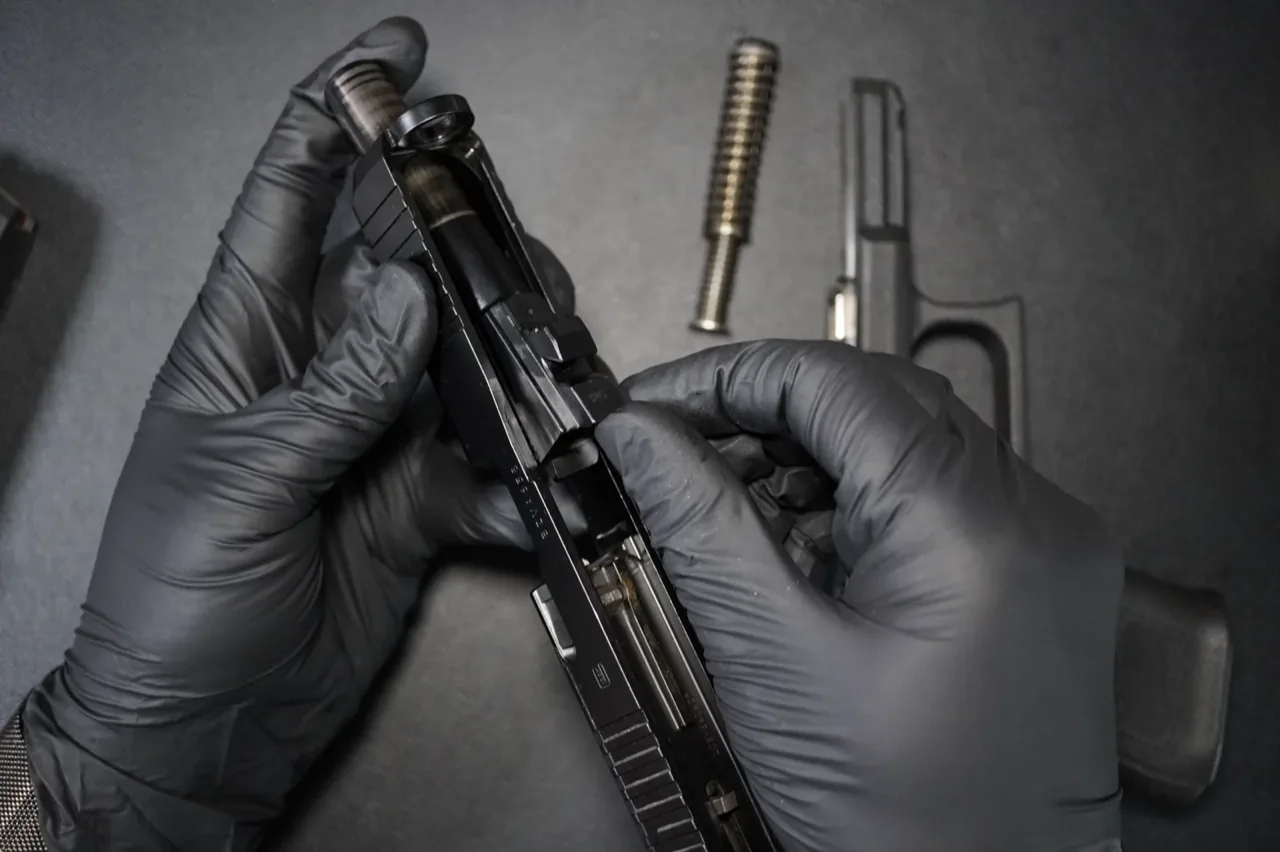
Once the recoil spring assembly is out, the barrel usually lifts out easily.
That's all you need for routine field stripping.
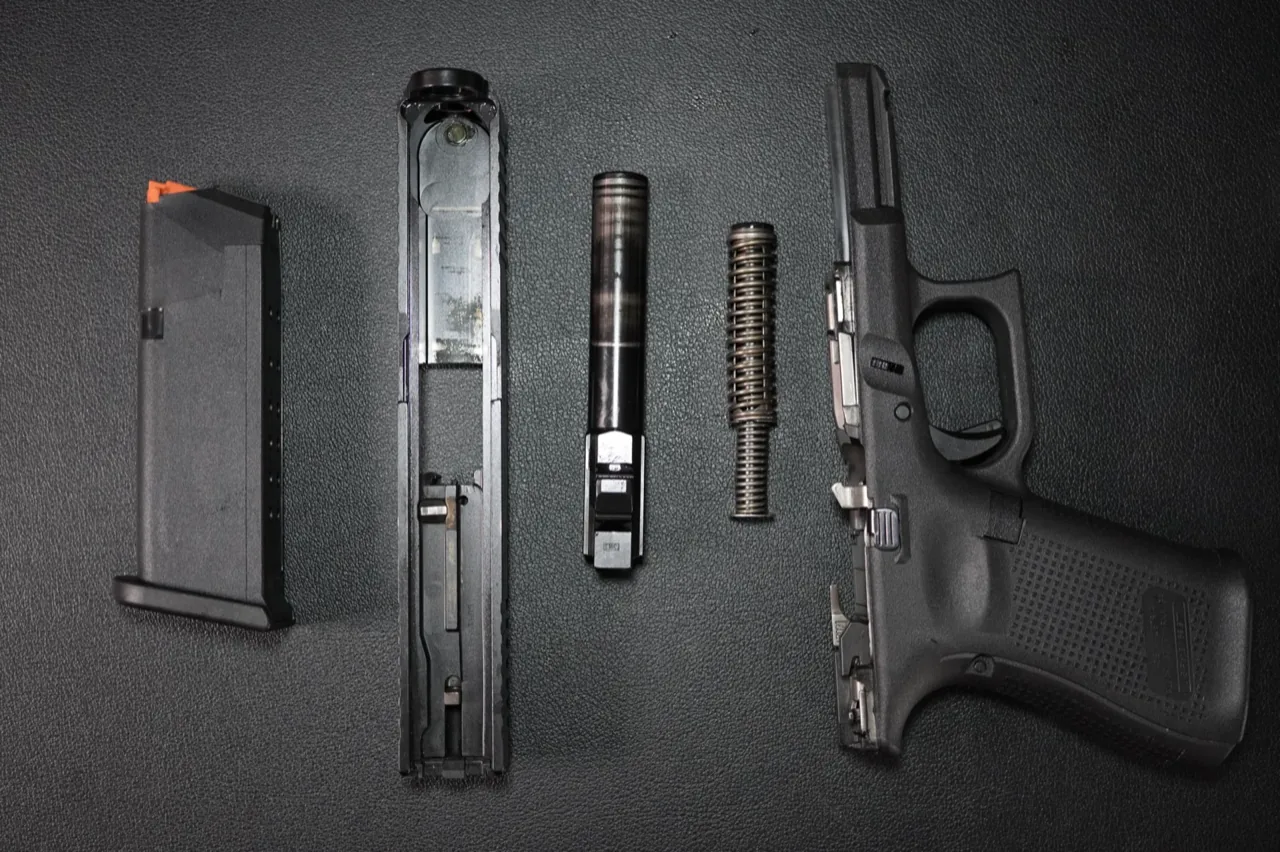
The GLOCK manual says not to further disassemble the pistol beyond this point unless the work is being done by a GLOCK-certified armorer.
Part 3: Reassembly
Step 12. Reinsert the barrel into the slide and seat it fully.
Set the front of the barrel into the slide first, then lower the rear into place.
Step 13. Reinstall the recoil spring assembly. Put the small end into the front of the slide, compress it slightly, and seat the large end in the second semi-circular notch on the barrel locking cams.
That second notch matters. The rear end of the spring assembly should look centered and stable, not crooked or half-seated. If the recoil spring assembly is not seated correctly, the pistol may not cycle properly.
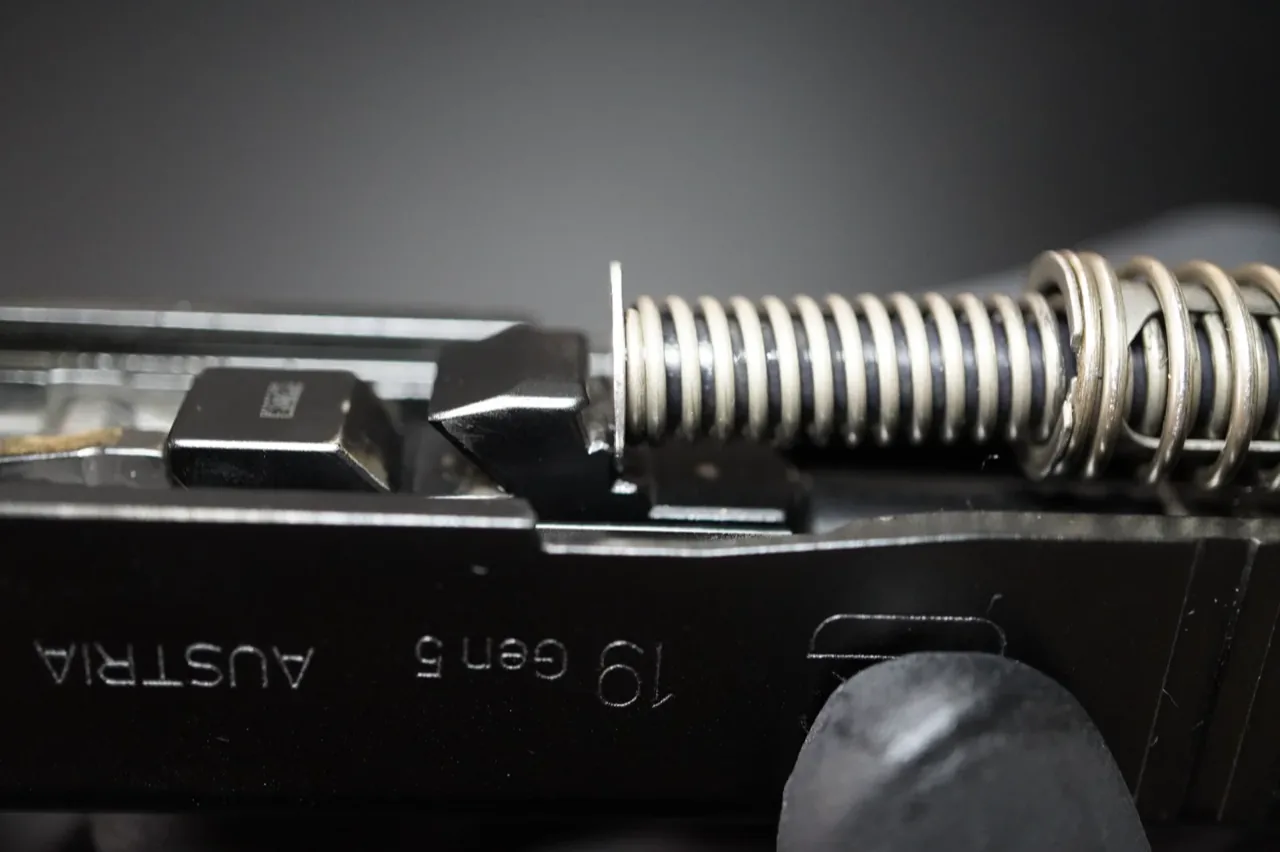
Step 14. Place the slide on the frame rails and push it straight to the rear until it snaps into place.
You do not need to pull the slide lock down for reassembly. Just line the slide up with the frame rails and push it straight back.
Part 4: Quick Inspection
After reassembly, the manual recommends a basic inspection. With the pistol still unloaded, do these three checks:
- Trigger safety test. Cycle the slide to reset the trigger, then try to pull the trigger by pressing on the sides of it without depressing the center trigger safety. The trigger should not move rearward and the pistol should not dry fire.
- Trigger reset test. Pull the trigger and hold it to the rear. Rack the slide, then slowly release the trigger. It should reset forward with a noticeable click.
- Slide lock-open test. Insert an empty magazine and pull the slide fully to the rear. The slide should lock open.
That is it. Once you understand the order, a Glock 19 field strip is straightforward. For most beginners, the entire process gets easy as soon as two things click: the chamber check must happen before the trigger press, and the slide should move back only a tiny amount before you pull down the slide lock.
Keep the official manual handy for factory diagrams and model-specific details: GLOCK downloadable materials.
How many rounds have you put through your Glock 19?
Your Glock 19 is due for a new recoil spring assembly about every 5,000 rounds. That number only helps if you actually know your round count.
If you are not tracking it, you are guessing on maintenance. If you don't replace the recoil spring on time, the gun can start jamming, not fully closing after a shot, and wearing out parts faster.
RoundKeep fixes that. Log each practice session once, and the app keeps a running round count for every firearm you own. As your Glock 19 gets close to 5,000 rounds, you'll know it is time to replace the recoil spring assembly before it becomes a problem.
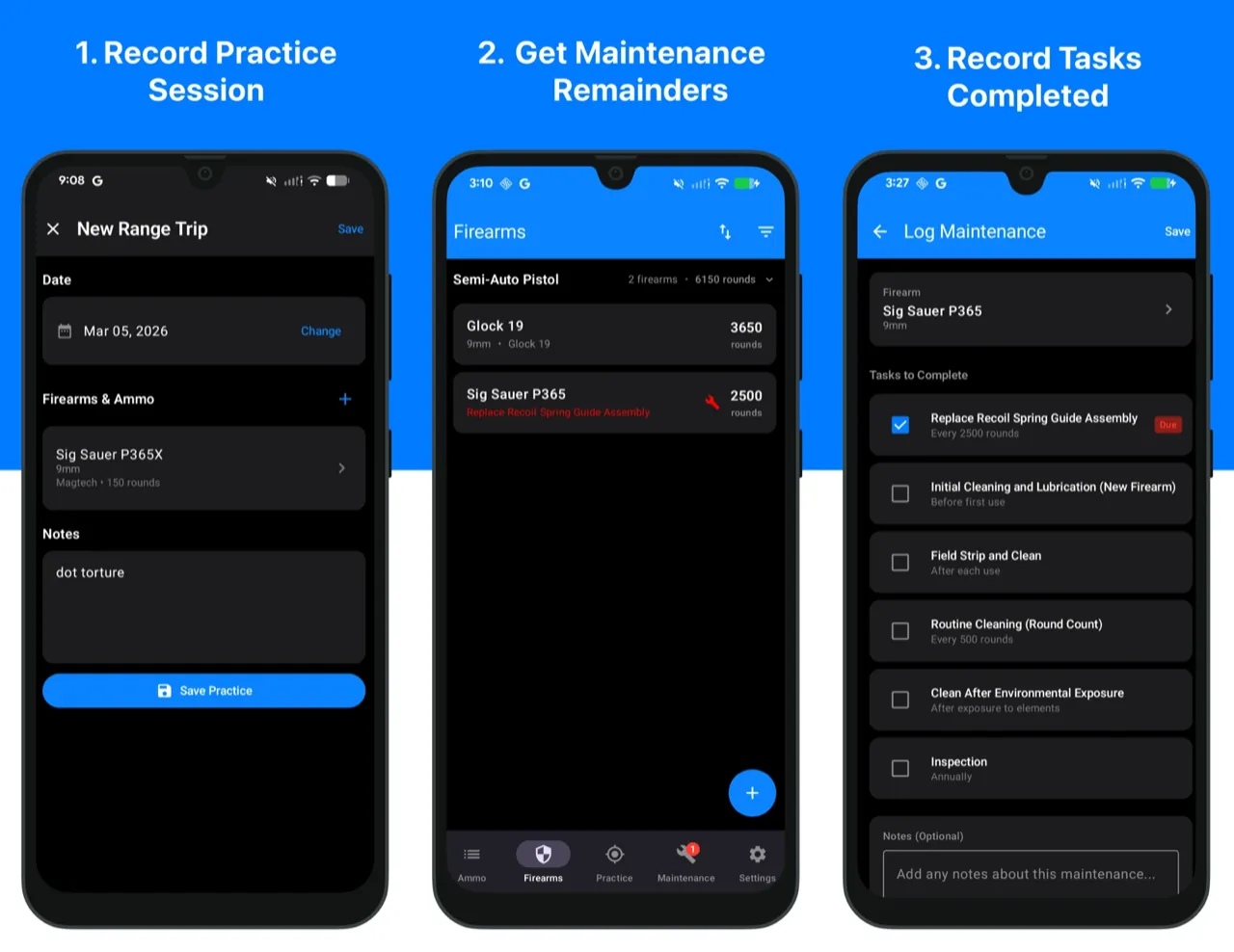
Download RoundKeep to track round counts automatically and stay ahead of maintenance for your Glock 19. Available on the App Store and Google Play:


Keep reading
How to Field Strip and Reassemble a Staccato HD 3.6
Step-by-step field strip and reassembly for the Staccato HD 3.6, including the method that works on a brand-new gun before the slide stop loosens up.
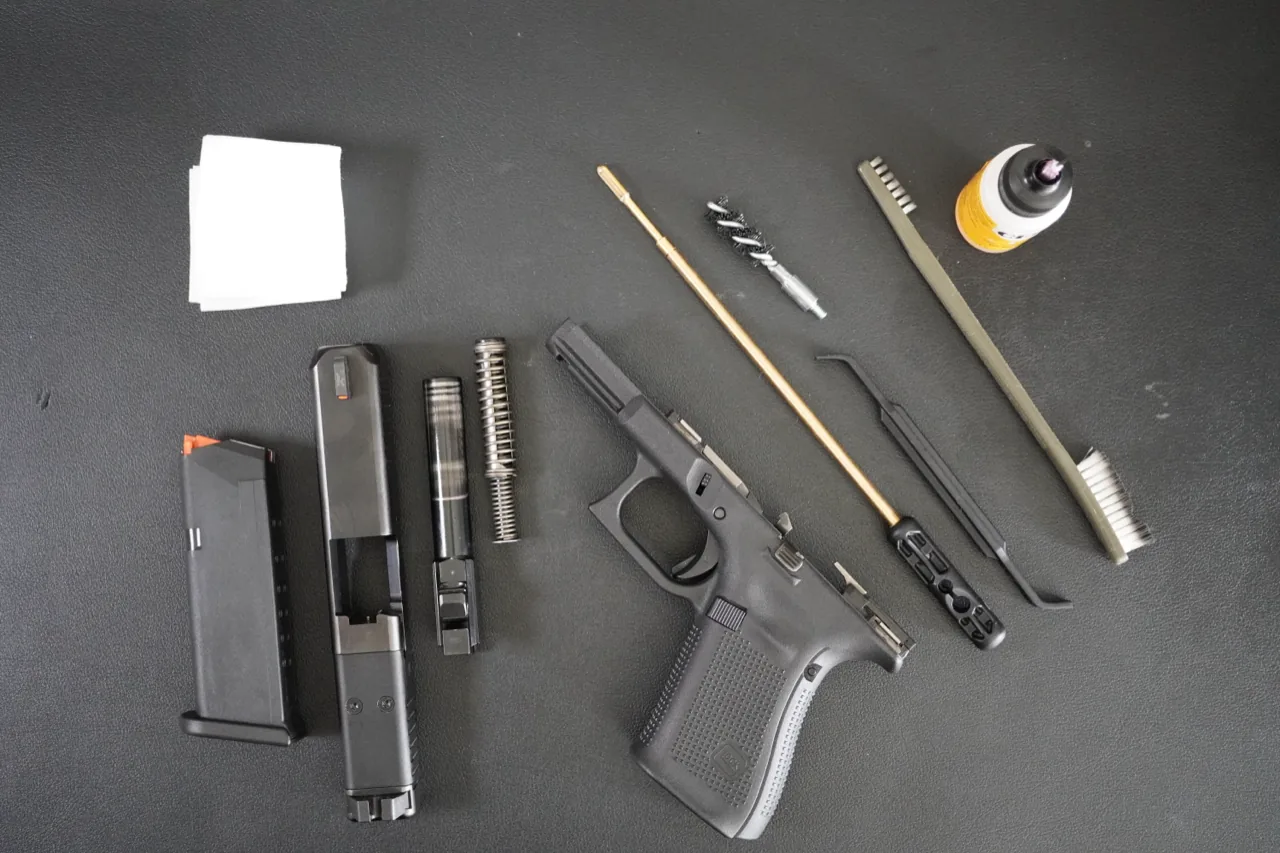
How to Clean & Lubricate a Glock 19
A concise beginner-friendly guide to cleaning and lubricating a Glock 19 after field stripping it, based on the GLOCK owner manual.